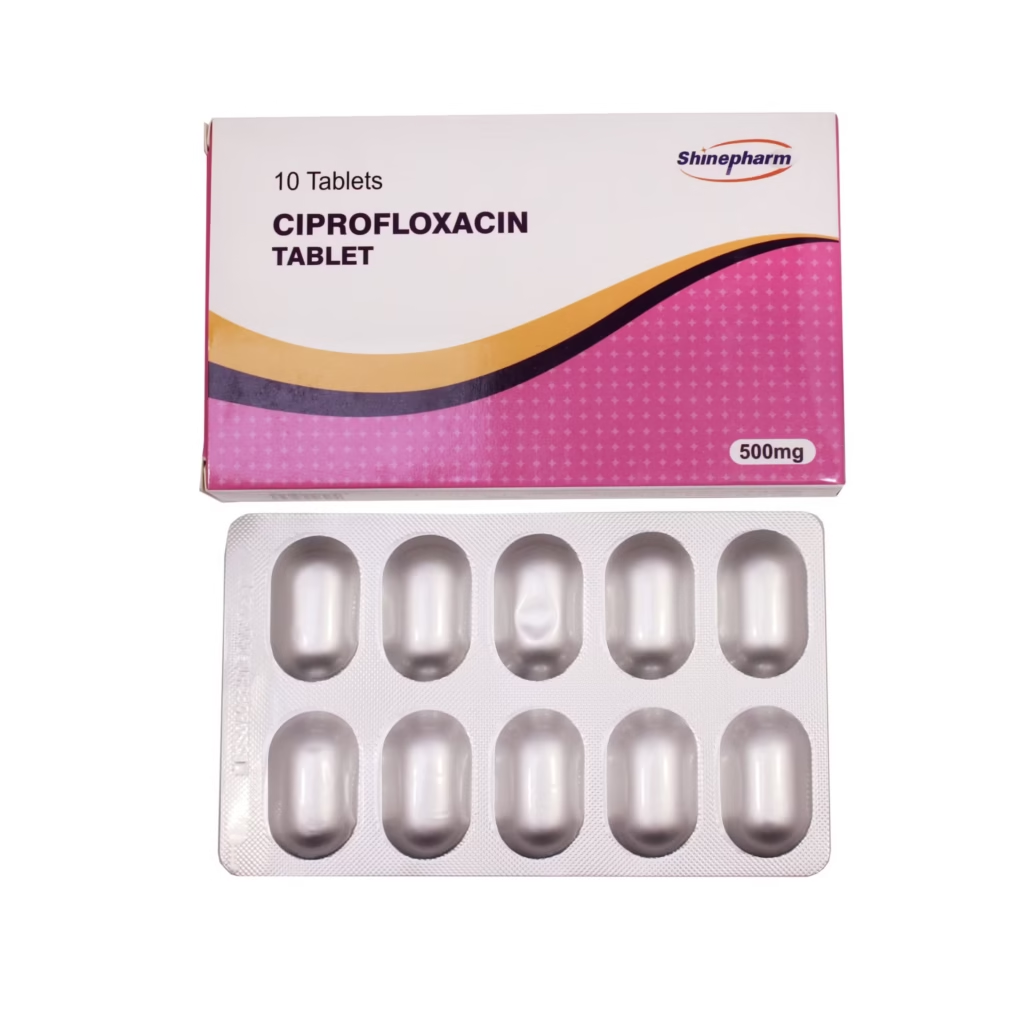

Overview
Ciprofloxacin is a second-generation fluoroquinolone antibiotic with broad-spectrum bactericidal activity. It’s one of the most widely prescribed quinolones in clinical medicine, used to treat infections involving the urinary tract, respiratory system, gastrointestinal tract, bones, and soft tissues.
According to Katzung’s Basic & Clinical Pharmacology, ciprofloxacin and other fluoroquinolones work by inhibiting bacterial DNA replication — a mechanism that makes them highly effective against both Gram-negative and select Gram-positive bacteria.
Pharmacologic Class
- Drug class: Fluoroquinolone antibacterial
- Generation: Second-generation
- Type: Bactericidal antibiotic
Mechanism of Action (Based on Katzung)
Ciprofloxacin acts by inhibiting bacterial DNA gyrase (topoisomerase II) and topoisomerase IV, enzymes that control the supercoiling and unlinking of bacterial DNA during replication.
- In Gram-negative bacteria: inhibition of DNA gyrase is the dominant mechanism.
- In Gram-positive bacteria: inhibition of topoisomerase IV is more significant.
Result: Interference with DNA replication, transcription, and repair → rapid bacterial death.
Antimicrobial Spectrum
Ciprofloxacin is active against a wide range of bacteria, including:
1. Gram-negative bacteria
- Escherichia coli
- Klebsiella species
- Proteus mirabilis
- Pseudomonas aeruginosa (excellent activity)
- Neisseria gonorrhoeae
- Haemophilus influenzae
- Salmonella and Shigella species
2. Gram-positive bacteria
- Moderate activity against Staphylococcus aureus
- Limited activity against Streptococcus pneumoniae (less than levofloxacin/moxifloxacin)
3. Atypical organisms
- Chlamydia trachomatis
- Mycoplasma pneumoniae
- Legionella pneumophila
Clinical Uses (According to Katzung)
Ciprofloxacin is used for infections caused by susceptible organisms, including:
| Condition | Ciprofloxacin Use |
|---|---|
| Urinary Tract Infections (UTIs) | Both complicated and uncomplicated UTIs caused by Gram-negative organisms |
| Bacterial Gastroenteritis | Salmonella, Shigella, E. coli, Campylobacter |
| Bone & Joint Infections | Especially Pseudomonas aeruginosa osteomyelitis |
| Respiratory Tract Infections | Chronic bronchitis, cystic fibrosis infections, anthrax inhalation |
| Skin & Soft Tissue Infections | Especially those caused by Gram-negative bacilli |
| Prostatitis | Effective for E. coli and other Gram-negative bacilli |
| Typhoid Fever | Alternative treatment for Salmonella typhi |
| Anthrax (inhalational) | Drug of choice (post-exposure prophylaxis and treatment) |
Pharmacokinetics
| Parameter | Details |
|---|---|
| Absorption | Rapid oral absorption (bioavailability ~70%) |
| Distribution | Wide tissue penetration (urine, kidneys, lungs, prostate, bile) |
| Protein Binding | Low (20–40%) |
| Metabolism | Hepatic (partially metabolized to less active metabolites) |
| Excretion | Primarily renal (glomerular filtration and tubular secretion) |
| Half-life | 3–5 hours (extended in renal impairment) |
Dosage Forms
- Tablets: 250 mg, 500 mg, 750 mg
- Oral Suspension: 250 mg/5 mL
- IV Infusion: 200 mg/100 mL, 400 mg/200 mL
- Ophthalmic and Otic Solutions for local infections
Adverse Effects (Katzung’s Pharmacology)
Fluoroquinolones, including ciprofloxacin, are generally well tolerated, but adverse effects can occur:
| System | Adverse Effects |
|---|---|
| Gastrointestinal | Nausea, vomiting, diarrhea, abdominal pain |
| CNS | Dizziness, insomnia, headache, rarely seizures |
| Musculoskeletal | Tendinitis, tendon rupture (especially in elderly and corticosteroid users) |
| Cardiovascular | QT interval prolongation (risk with other QT-prolonging agents) |
| Skin | Photosensitivity reactions |
| Hepatic | Mild elevation in liver enzymes |
| Others | Superinfections, Clostridioides difficile colitis |
Contraindications
- Hypersensitivity to fluoroquinolones
- Pregnancy and lactation (due to cartilage damage risk in animal studies)
- Children under 18 years (unless benefits outweigh risks)
- Concurrent use with tizanidine (risk of hypotension and sedation)
Drug Interactions
| Interacting Drug/Class | Effect / Mechanism |
|---|---|
| Antacids (Al, Mg, Ca) | ↓ Absorption of ciprofloxacin due to chelation |
| Theophylline | ↑ Serum theophylline levels → risk of toxicity |
| Warfarin | ↑ Anticoagulant effect (monitor INR) |
| NSAIDs | May enhance CNS stimulation and seizure risk |
| Caffeine | Reduced metabolism → increased CNS stimulation |
| Corticosteroids | ↑ Risk of tendon rupture |
Mechanisms of Resistance
Resistance to ciprofloxacin occurs due to:
- Mutations in DNA gyrase or topoisomerase IV genes
- Decreased drug permeability (porin loss)
- Efflux pumps that actively remove the drug from bacterial cells
Cross-resistance among fluoroquinolones is common.
Special Considerations (Katzung Highlights)
- Ciprofloxacin is highly active against Pseudomonas aeruginosa, making it crucial for hospital-acquired infections.
- It is not the best choice for S. pneumoniae (use levofloxacin or moxifloxacin instead).
- Use cautiously in renal dysfunction, with dose adjustments required.
- Avoid in myasthenia gravis patients (risk of exacerbating muscle weakness).
Summary Table
| Property | Ciprofloxacin Summary |
|---|---|
| Drug Class | Fluoroquinolone antibiotic |
| Mechanism | Inhibits bacterial DNA gyrase & topoisomerase IV |
| Activity | Broad-spectrum; mainly Gram-negative |
| Uses | UTIs, GI infections, respiratory infections, anthrax |
| Adverse Effects | GI upset, CNS effects, tendon rupture, QT prolongation |
| Excretion | Primarily renal |
| Contraindications | Pregnancy, lactation, children <18 years |
| Unique Feature | Excellent activity vs Pseudomonas aeruginosa |
Conclusion
Ciprofloxacin remains a cornerstone antibiotic in modern clinical practice. Its broad-spectrum efficacy, oral bioavailability, and potent activity against Gram-negative organisms make it a valuable drug — particularly for urinary, gastrointestinal, and respiratory infections.
However, judicious use is essential due to the growing threat of fluoroquinolone resistance and potential adverse effects. Katzung’s Pharmacology emphasizes that ciprofloxacin should be prescribed only when clearly indicated, with awareness of its interactions, contraindications, and long-term safety considerations.
External References
- Katzung BG, Vanderah TW. Basic & Clinical Pharmacology, 15th Edition. McGraw-Hill Education, 2021.
- FDA Ciprofloxacin Drug Label: https://www.accessdata.fda.gov/drugsatfda_docs/label/
- WHO Model List of Essential Medicines – Ciprofloxacin.
- PubMed Central: Mechanisms of Action and Resistance to Fluoroquinolones.
