
1. Introduction
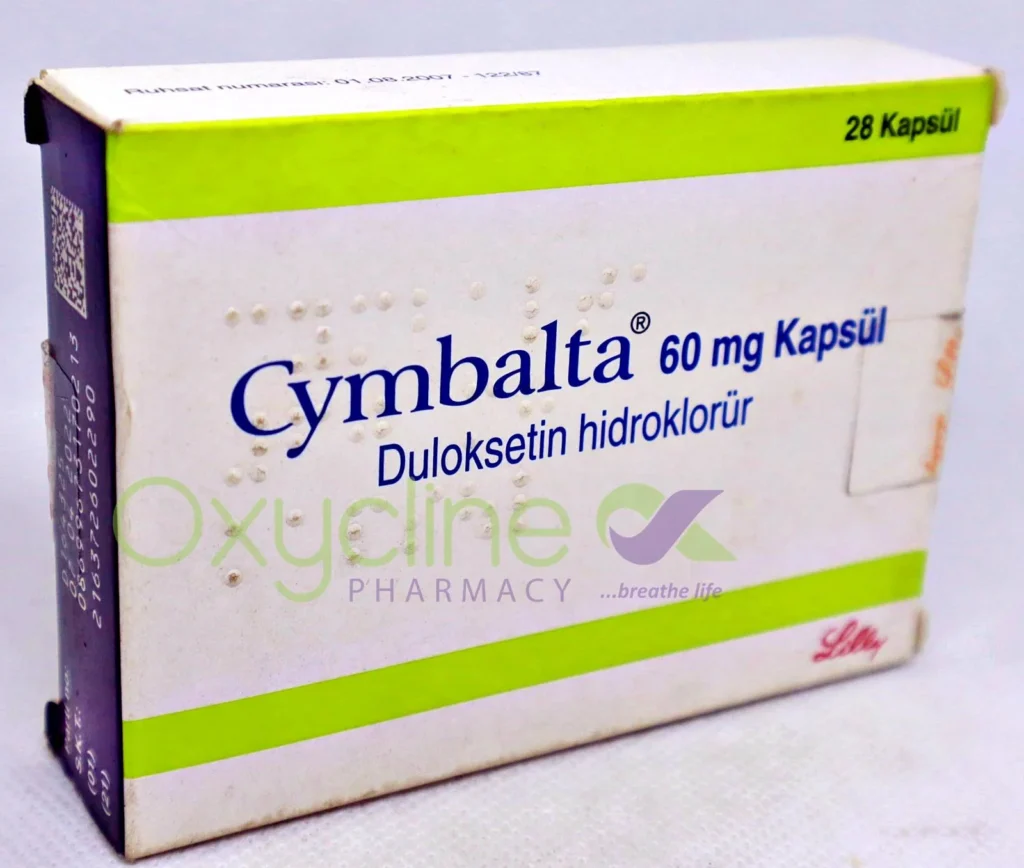
Cymbalta® (generic name: Duloxetine) is a serotonin–norepinephrine reuptake inhibitor (SNRI) used in the treatment of major depressive disorder (MDD), generalized anxiety disorder (GAD), fibromyalgia, diabetic peripheral neuropathic pain, and chronic musculoskeletal pain.
Approved by the U.S. Food and Drug Administration (FDA) in 2004, Duloxetine represents a second-generation antidepressant developed to improve upon the efficacy and tolerability of older tricyclic antidepressants (TCAs) and first-generation SSRIs.
It exhibits dual reuptake inhibition of serotonin (5-HT) and norepinephrine (NE), thereby enhancing neurotransmission in key brain regions responsible for mood regulation, pain modulation, and anxiety control.
2. Drug Classification
| Parameter | Details |
|---|---|
| Generic name | Duloxetine |
| Brand name | Cymbalta® |
| Drug class | Serotonin–Norepinephrine Reuptake Inhibitor (SNRI) |
| Pharmacological category | Antidepressant, anxiolytic, neuropathic pain modulator |
| Schedule | Prescription-only (Rx) |
| Controlled substance | Not classified as a controlled drug in the U.S. |
| Manufacturer | Eli Lilly and Company |
| Chemical structure | N-methyl-γ-(1-naphthyloxy)-2-thiophenepropylamine hydrochloride |
| Molecular formula | C₁₈H₁₉NOS·HCl |
| Molecular weight | 333.87 g/mol |
3. Mechanism of Action
3.1 Central Neurochemical Pathways
Cymbalta acts primarily by blocking the presynaptic reuptake transporters of serotonin (SERT) and norepinephrine (NET) within the central nervous system (CNS).
This inhibits reuptake of these monoamines into presynaptic neurons, resulting in increased synaptic concentrations of serotonin and norepinephrine.
Enhanced neurotransmission through serotonergic and noradrenergic pathways helps to:
- Improve mood (via 5-HT elevation in the prefrontal cortex and limbic system)
- Reduce pain perception (via NE and 5-HT modulation in the descending spinal tracts)
- Decrease anxiety symptoms (via enhanced amygdalar regulation)
3.2 Receptor-Level Mechanism
Duloxetine does not significantly bind to dopamine (DA), histamine (H1), muscarinic (M1), or α-adrenergic receptors, which explains its relatively lower rate of side effects such as sedation, weight gain, and anticholinergic reactions.
| Receptor / Transporter | Action of Duloxetine |
|---|---|
| Serotonin Transporter (SERT) | Potent inhibition |
| Norepinephrine Transporter (NET) | Moderate inhibition |
| Dopamine Transporter (DAT) | Minimal |
| Muscarinic, H1, α1 receptors | Negligible affinity |
| Ion channels | No clinically relevant effect |
Thus, Duloxetine’s dual reuptake inhibition without receptor blockade differentiates it from older antidepressants like TCAs and MAOIs.
4. Pharmacodynamics
4.1 CNS Effects
Cymbalta enhances synaptic serotonin and norepinephrine levels, which leads to:
- Mood elevation through prefrontal cortical and limbic system activation
- Improved sleep and appetite regulation
- Reduction in neuropathic pain perception through spinal cord descending inhibition
- Anxiolytic effects via amygdalar 5-HT1A receptor modulation
4.2 Analgesic Mechanism
Unlike pure SSRIs, Cymbalta provides neuropathic pain relief due to enhancement of descending inhibitory pain pathways in the brainstem and spinal cord (especially via the locus coeruleus and periaqueductal gray).
The increased norepinephrine activity plays a critical role in modulating chronic pain transmission. This unique action makes Duloxetine a dual-action antidepressant and analgesic.
5. Pharmacokinetics (ADME)
5.1 Absorption
- Bioavailability: ~50% after oral administration (due to first-pass metabolism).
- Time to peak plasma concentration (Tmax): 6 hours.
- Food effect: Food delays Tmax by about 1 hour but does not affect overall absorption.
- Formulation: Enteric-coated capsules to prevent degradation in gastric acid.
5.2 Distribution
- Protein binding: ~95% (primarily to albumin and α1-acid glycoprotein).
- Volume of distribution (Vd): ~1640 L, indicating extensive tissue penetration.
- Crosses blood–brain barrier: Yes, achieving effective CNS concentrations.
5.3 Metabolism
Duloxetine undergoes extensive hepatic metabolism mainly via:
- CYP1A2 → forms 4-hydroxy duloxetine
- CYP2D6 → forms 5-hydroxy-6-methoxy duloxetine glucuronide
Both pathways yield inactive metabolites excreted in urine.
Metabolic caution:
- Patients with hepatic impairment or CYP2D6 poor metabolizer status show increased plasma concentrations.
- Co-administration with strong CYP1A2 inhibitors (e.g., fluvoxamine, ciprofloxacin) or CYP2D6 inhibitors (e.g., paroxetine, quinidine) can elevate Duloxetine levels.
5.4 Elimination
- Half-life (t½): 12 hours (range 8–17 h).
- Excretion: ~70% via urine, 20% via feces (mostly as metabolites).
- Steady-state achieved: Within 3 days of daily dosing.
6. Dose–Response Relationship
Cymbalta exhibits a non-linear pharmacokinetic profile due to saturable metabolism at higher doses.
Increased plasma concentrations may result in greater adverse effects without proportional efficacy gain beyond 120 mg/day.
- Therapeutic plasma concentration: 20–120 ng/mL.
- Dose–response studies show optimal antidepressant and analgesic effect between 60–90 mg/day.
7. Mechanism in Disease-Specific Contexts
7.1 Major Depressive Disorder (MDD)
Depression involves deficient serotonergic and noradrenergic neurotransmission in cortical–limbic circuits.
Duloxetine restores neurotransmitter balance in:
- Prefrontal cortex → enhances mood regulation
- Hippocampus → improves memory and emotional processing
- Amygdala → decreases anxiety and emotional hyperreactivity
Clinical improvement typically begins after 2–4 weeks, with full remission possible in 6–8 weeks.
7.2 Generalized Anxiety Disorder (GAD)
Chronic anxiety is associated with hyperactivity of the amygdala and reduced prefrontal inhibition.
By elevating serotonin and norepinephrine, Cymbalta:
- Reduces somatic symptoms (e.g., tension, palpitations)
- Improves cognitive anxiety and worry control
- Normalizes HPA-axis dysregulation
7.3 Diabetic Peripheral Neuropathic Pain
Peripheral nerve injury leads to hyperexcitability of spinal neurons. Duloxetine enhances descending inhibition from serotonergic and noradrenergic pathways, attenuating pain signaling.
Studies demonstrate a significant reduction in pain scores (up to 50%) after 12 weeks of treatment at 60 mg/day.
7.4 Fibromyalgia and Chronic Musculoskeletal Pain
Cymbalta’s combined antidepressant–analgesic profile makes it effective in central sensitization syndromes such as fibromyalgia, where pain modulation mechanisms are impaired.
8. Neurochemical Summary Table
| Neurotransmitter System | Effect of Duloxetine | Clinical Impact |
|---|---|---|
| Serotonin (5-HT) | Increased synaptic concentration via SERT inhibition | Antidepressant, anxiolytic |
| Norepinephrine (NE) | Increased synaptic concentration via NET inhibition | Analgesic, antidepressant |
| Dopamine (DA) | Minor elevation in prefrontal cortex | Cognitive enhancement |
| GABA / Glutamate | Indirect modulation | Mood stabilization |
| Acetylcholine / Histamine | Minimal effect | Low sedation, minimal anticholinergic action |
9. Clinical Rationale for SNRI Therapy
| Property | SSRIs (e.g., sertraline) | SNRIs (e.g., duloxetine) |
|---|---|---|
| Primary mechanism | Serotonin reuptake inhibition only | Serotonin + norepinephrine inhibition |
| Pain relief | Limited | Strong analgesic properties |
| Onset of effect | Moderate | Faster (in mood and pain relief) |
| Common side effects | Sexual dysfunction, GI upset | Nausea, mild hypertension |
| Clinical advantage | Well-tolerated for anxiety | Effective in depression + pain syndromes |
Cymbalta is thus preferred in patients with depression coexisting with chronic pain or neuropathic symptoms, where SSRIs show limited benefit.
10. Clinical Pharmacology Summary
| Parameter | Details |
|---|---|
| Class | SNRI (Serotonin–Norepinephrine Reuptake Inhibitor) |
| Mechanism | Dual inhibition of SERT and NET |
| Absorption | Oral, ~50% bioavailability |
| Peak plasma time | 6 hours |
| Protein binding | 95% |
| Metabolism | Hepatic (CYP1A2, CYP2D6) |
| Half-life | ~12 hours |
| Excretion | Urine (70%), feces (20%) |
| Therapeutic uses | MDD, GAD, fibromyalgia, neuropathic pain |
| Advantages | Dual action, analgesic effect, minimal receptor binding |
| Limitations | Hepatic metabolism, potential withdrawal on discontinuation |
End of Part 1 Summary
Cymbalta (Duloxetine) is a multifunctional SNRI that bridges the gap between antidepressant and analgesic therapy.
Through dual monoamine reuptake inhibition, it restores neurochemical balance and alleviates both emotional and somatic symptoms.
Part 2 will discuss:
- Clinical indications
- Dosage regimens
- Side effects and precautions
- Drug interactions
- Evidence from clinical trials
1. Therapeutic Indications
Cymbalta (Duloxetine) is an SNRI antidepressant approved for several psychiatric and somatic disorders where dysregulation of serotonergic and noradrenergic transmission plays a central role.
1.1 Major Depressive Disorder (MDD)
- Cymbalta is indicated for acute and maintenance treatment of MDD in adults.
- It helps improve mood, energy, concentration, sleep, and appetite through dual inhibition of serotonin (5-HT) and norepinephrine (NE) reuptake.
- Clinical trials demonstrate that Cymbalta produces significant improvement in HAM-D (Hamilton Depression Rating Scale) and MADRS (Montgomery-Åsberg Depression Rating Scale) scores compared with placebo.
1.2 Generalized Anxiety Disorder (GAD)
- Effective in both acute and long-term management of GAD.
- Cymbalta reduces psychic anxiety, restlessness, tension, and somatic symptoms associated with chronic anxiety.
- It is often preferred in patients presenting with co-existing pain symptoms, due to its analgesic profile.
1.3 Diabetic Peripheral Neuropathic Pain (DPNP)
- One of the first SNRIs approved by the FDA for neuropathic pain associated with diabetes mellitus.
- Cymbalta modulates pain signaling through descending inhibitory pathways in the spinal cord, enhancing NE and 5-HT activity to reduce pain transmission.
- Studies show improvement in VAS (Visual Analogue Scale) pain scores within 2–4 weeks of initiation.
1.4 Fibromyalgia
- Cymbalta provides central analgesic action independent of antidepressant effect.
- Reduces chronic widespread pain, fatigue, and sleep disturbances by altering pain perception pathways in the CNS.
- Commonly used when patients have co-existing anxiety or depressive symptoms.
1.5 Chronic Musculoskeletal Pain
- Approved for chronic pain syndromes such as osteoarthritis and chronic low-back pain.
- Improves functional outcomes and quality of life with sustained analgesic efficacy.
2. Dosage and Administration
2.1 Formulation
- Available as delayed-release capsules in 20 mg, 30 mg, and 60 mg strengths.
- Must be swallowed whole; not to be crushed or chewed due to enteric coating.
2.2 Major Depressive Disorder
- Initial dose: 30 mg once daily for 1 week, then increase to 60 mg/day.
- Maintenance dose: 60 mg once daily.
- Maximum dose: Up to 120 mg/day (higher doses rarely provide additional benefit).
2.3 Generalized Anxiety Disorder
- Initial dose: 30 mg once daily for 1 week, then 60 mg/day.
- Maintenance: 60–90 mg/day; may increase to 120 mg/day if inadequate response.
2.4 Diabetic Peripheral Neuropathy
- Recommended dose: 60 mg once daily.
- Clinical improvement typically noted within 2 weeks; reassess after 12 weeks.
2.5 Fibromyalgia and Chronic Pain
- Starting dose: 30 mg once daily for 1 week.
- Target dose: 60 mg once daily.
- Titration helps minimize nausea and dizziness.
2.6 Special Populations
- Elderly: Start at the lower end of dosage range; monitor for hyponatremia and falls.
- Hepatic impairment: Contraindicated in chronic liver disease or substantial alcohol use.
- Renal impairment: Avoid if CrCl <30 mL/min; otherwise, use with caution.
3. Adverse Effects
Cymbalta’s adverse-effect profile arises mainly from enhanced serotonergic and noradrenergic neurotransmission.
3.1 Common Adverse Effects (≥5%)
| System | Adverse Effects | Mechanism |
|---|---|---|
| CNS | Headache, dizziness, somnolence, insomnia | Increased central monoamines |
| GI | Nausea, dry mouth, constipation | Serotonin in GI tract |
| Autonomic | Sweating, tremor, fatigue | NE activation |
| Sexual | Decreased libido, delayed ejaculation, anorgasmia | 5-HT receptor stimulation |
| Weight | Mild weight loss initially | Appetite suppression |
3.2 Less Common Adverse Effects
- Hypertension or orthostatic hypotension
- Palpitations, tachycardia
- Urinary hesitation or retention (due to NE effect on urethral sphincter)
- Mild increases in hepatic enzymes (ALT, AST)
- Blurred vision and mydriasis
3.3 Serious Adverse Effects
- Hepatotoxicity: Rare but potentially severe; avoid in patients with substantial alcohol use or chronic hepatic disease.
- Serotonin syndrome: Risk increases with co-administration of serotonergic agents (e.g., SSRIs, triptans, MAOIs).
- Hyponatremia (SIADH): Particularly in elderly or those on diuretics.
- Suicidality: Increased risk in young adults (<25 years) during early therapy.
- Stevens-Johnson Syndrome (rare): Requires immediate discontinuation.
4. Contraindications
- Concomitant use with MAO inhibitors or within 14 days of stopping MAOI therapy.
- Uncontrolled narrow-angle glaucoma.
- Severe hepatic impairment or substantial alcohol consumption.
- Known hypersensitivity to duloxetine or formulation components.
5. Drug Interactions
| Category | Interacting Drug/Class | Effect/Mechanism |
|---|---|---|
| MAOIs | Phenelzine, Tranylcypromine | Risk of serotonin syndrome |
| SSRIs/SNRIs/Triptans | Sertraline, Venlafaxine, Sumatriptan | Additive serotonergic toxicity |
| CYP1A2 inhibitors | Ciprofloxacin, Fluvoxamine | ↑ Duloxetine plasma levels |
| CYP2D6 substrates | TCAs, antipsychotics, codeine | Duloxetine inhibits CYP2D6, raising levels |
| Alcohol | Chronic use | ↑ Hepatotoxic risk |
| Anticoagulants/NSAIDs | Warfarin, Ibuprofen | ↑ Bleeding tendency due to platelet inhibition |
6. Monitoring Parameters
- Baseline: Liver function tests, renal function, blood pressure, sodium levels.
- During therapy: Monitor for suicidal ideation, blood pressure, and hepatic enzymes.
- Withdrawal: Taper gradually over 2–4 weeks to prevent discontinuation syndrome (dizziness, paresthesia, irritability).
7. Precautions
- Avoid abrupt cessation.
- Caution in patients with hypertension, glaucoma, bipolar disorder, or seizure history.
- Evaluate periodically for therapeutic response and adverse events.
1. Comparative Pharmacology of Cymbalta (Duloxetine)
Cymbalta belongs to the serotonin–norepinephrine reuptake inhibitor (SNRI) class and is pharmacologically distinct from SSRIs such as sertraline and escitalopram, and from atypical antidepressants such as bupropion.
1.1 Cymbalta vs. Zoloft (Sertraline)
| Feature | Cymbalta (Duloxetine) | Zoloft (Sertraline) |
|---|---|---|
| Class | SNRI | SSRI |
| Mechanism | Inhibits serotonin and norepinephrine reuptake | Selective serotonin reuptake inhibitor |
| Approved Uses | Depression, GAD, diabetic neuropathy, fibromyalgia, chronic pain | Depression, OCD, panic disorder, PTSD, PMDD |
| Pain Efficacy | Effective for neuropathic & somatic pain | Minimal analgesic activity |
| Adverse Effects | Nausea, dry mouth, fatigue, sexual dysfunction | GI upset, insomnia, sexual dysfunction |
| Hepatic Risk | Mild–moderate ↑ in liver enzymes possible | Rare |
| Preferred In | Depression with chronic pain or fatigue | Depression with prominent anxiety/OCD |
➡️ Summary: Cymbalta provides broader analgesic benefit, while Zoloft is often first-line for anxiety and obsessive symptoms due to tolerability.
1.2 Cymbalta vs. Lexapro (Escitalopram)
| Feature | Cymbalta | Lexapro |
|---|---|---|
| Mechanism | Dual 5-HT & NE reuptake inhibition | Highly selective 5-HT reuptake blockade |
| Onset of Action | 1–2 weeks (for mood), earlier for pain | 2–4 weeks for mood |
| Sedation | Mild | Low |
| Sexual Dysfunction | Moderate | Moderate-high |
| Weight Change | Slight loss initially | Neutral or slight gain |
| Clinical Edge | Neuropathic and chronic pain management | Fewer drug–drug interactions |
➡️ Summary: Lexapro has cleaner tolerability, while Cymbalta offers pain-modulating advantages.
1.3 Cymbalta vs. Effexor XR (Venlafaxine)
| Feature | Cymbalta | Effexor XR |
|---|---|---|
| NE Potency | Balanced 5-HT & NE inhibition | Dose-dependent (NE at >150 mg) |
| Half-Life | 12 h | 5 h (requires XR formulation) |
| Withdrawal Risk | Moderate | High |
| Adverse Effects | Nausea, dry mouth | Hypertension, withdrawal symptoms |
| Metabolism | CYP1A2, CYP2D6 | CYP2D6 |
| Pain Efficacy | Strong evidence | Moderate evidence |
➡️ Summary: Both are potent SNRIs, but Cymbalta has less severe withdrawal and broader analgesic indications.
1.4 Cymbalta vs. Wellbutrin (Bupropion)
| Feature | Cymbalta | Wellbutrin |
|---|---|---|
| Mechanism | 5-HT and NE reuptake inhibitor | Dopamine and NE reuptake inhibitor |
| Energy/Activation | Balanced | More stimulating |
| Anxiety Risk | Low | May exacerbate anxiety |
| Sexual Side Effects | Moderate | Minimal |
| Clinical Use | Depression with pain | Depression with low energy or sexual dysfunction |
➡️ Summary: Wellbutrin is energizing but lacks analgesic efficacy; Cymbalta is better for somatic and neuropathic symptoms.
2. Clinical Research & Efficacy Evidence
2.1 Major Depressive Disorder (MDD)
- Multiple placebo-controlled, double-blind trials show superior efficacy of Cymbalta 60 mg/day versus placebo.
- Remission rates approach 45–50%, with significant improvement in HAM-D scores.
- Cymbalta also demonstrated efficacy comparable to paroxetine and venlafaxine XR.
2.2 Diabetic Peripheral Neuropathic Pain
- The EMPIRE and COMBO-DN trials confirm duloxetine’s benefit in reducing neuropathic pain intensity and improving functional disability.
- Analgesic effects occur independent of antidepressant action.
2.3 Fibromyalgia
- FDA approval (2008) followed two pivotal phase III trials showing improvement in Fibromyalgia Impact Questionnaire (FIQ) scores.
- Works by modulating central pain processing and improving sleep quality.
2.4 Anxiety Disorders
- Cymbalta 60–120 mg/day reduces HAM-A (Hamilton Anxiety Rating Scale) scores significantly versus placebo.
- Also improves physical anxiety symptoms such as GI distress and muscle tension.
2.5 Long-Term Studies
- Maintenance trials demonstrate sustained remission over 52 weeks without major weight or cognitive impairment.
- No significant QT prolongation risk, differentiating it from certain SSRIs.
3. Advantages and Limitations
3.1 Advantages
- Dual action on serotonin and norepinephrine for broader efficacy.
- Effective for neuropathic pain, fibromyalgia, and depression.
- Lower risk of hypertension and withdrawal compared with venlafaxine.
- Fewer drug–drug interactions than tricyclic antidepressants.
3.2 Limitations
- Hepatotoxic potential in predisposed individuals.
- Sexual dysfunction and GI disturbances are common.
- Requires gradual tapering to avoid discontinuation symptoms.
- Cost higher than generic SSRIs.
4. Current and Future Research
- New trials explore duloxetine augmentation in treatment-resistant depression with atypical antipsychotics (e.g., aripiprazole).
- Ongoing research investigates its anti-inflammatory properties in chronic pain syndromes.
- Pharmacogenetic studies suggest CYP2D6 polymorphisms influence response variability.
- Recent focus on microglial modulation as part of duloxetine’s analgesic mechanism.
5. Clinical Pearls
- Effective choice when depression coexists with pain or somatic complaints.
- Avoid in patients with liver dysfunction or heavy alcohol use.
- Onset of analgesia may precede antidepressant effects.
- Always taper gradually to prevent withdrawal symptoms.
6. Professional Summary Table
| Parameter | Cymbalta (Duloxetine) |
|---|---|
| Class | SNRI |
| Mechanism | Inhibits reuptake of serotonin & norepinephrine |
| Indications | MDD, GAD, fibromyalgia, DPNP, chronic pain |
| Dosage Range | 30–120 mg/day (usual 60 mg) |
| Metabolism | CYP1A2, CYP2D6 |
| Elimination Half-Life | ~12 hours |
| Adverse Effects | Nausea, dry mouth, dizziness, sexual dysfunction |
| Contraindications | Hepatic disease, MAOI use |
| Pregnancy Category | C |
| Unique Feature | Dual antidepressant and analgesic activity |
7. Frequently Asked Questions (FAQs)
Q1: How long does Cymbalta take to work?
Typically 2–4 weeks for mood improvement, but neuropathic pain relief may appear within 1–2 weeks.
Q2: Is Cymbalta addictive?
No, it is not addictive, but abrupt discontinuation can cause withdrawal symptoms (dizziness, irritability).
Q3: Can Cymbalta cause liver damage?
Rarely, yes. Regular liver monitoring is advised, especially with alcohol use or hepatic disease.
Q4: Can Cymbalta be combined with other antidepressants?
Caution is necessary; combination with other serotonergic agents increases the risk of serotonin syndrome.
Q5: Is Cymbalta safe in pregnancy?
Classified as Category C — use only if benefits outweigh risks. Neonatal withdrawal has been reported.
Q6: What happens if a dose is missed?
Take the next dose at the usual time; do not double. Consistency is essential for efficacy.
8. External References
- FDA. Cymbalta (duloxetine) Prescribing Information.
- Wernicke JF et al. J Clin Psychopharmacol. 2005;25(2):132–140.
- Goldstein DJ et al. Pain. 2005;116(3):109–118.
- Hudson JI et al. Arthritis Rheum. 2009;60(8):2169–2179.
- American Psychiatric Association. Practice Guideline for the Treatment of Patients with Major Depressive Disorder.