
Introduction
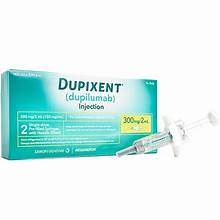
Dupixent (generic name: Dupilumab) is a monoclonal antibody used for treating several chronic inflammatory diseases such as atopic dermatitis (eczema), asthma, chronic rhinosinusitis with nasal polyps, eosinophilic esophagitis, and prurigo nodularis.
It represents a novel class of biologic therapy targeting interleukin-4 (IL-4) and interleukin-13 (IL-13) signaling pathways — both key cytokines involved in type 2 inflammatory responses.
From a pharmacological perspective, Dupixent is a fully human IgG4 monoclonal antibody, making it highly specific with minimal immunogenicity compared to older biologic agents.
Pharmacological Class and Composition
| Parameter | Details |
|---|---|
| Generic Name | Dupilumab |
| Brand Name | Dupixent |
| Drug Class | Monoclonal antibody (biologic immunomodulator) |
| Molecular Type | Recombinant human IgG4 monoclonal antibody |
| Mechanism | IL-4 and IL-13 receptor antagonist |
| Route of Administration | Subcutaneous injection |
| ATC Classification | D11AX24 (Other dermatological preparations) |
Mechanism of Action
Dupixent works by targeting and inhibiting the shared IL-4Rα subunit of the interleukin-4 (IL-4) and interleukin-13 (IL-13) receptors.
These interleukins are central to type 2 helper T-cell (Th2)–mediated inflammation, which underlies many allergic and atopic conditions.
Pathophysiological Basis
In diseases like atopic dermatitis, asthma, and chronic rhinosinusitis, IL-4 and IL-13 promote:
- Eosinophilic infiltration
- IgE synthesis by B-cells
- Mucus hypersecretion
- Epidermal barrier dysfunction
- Airway remodeling
By blocking IL-4Rα, Dupixent inhibits both IL-4–dependent and IL-13–dependent signaling, reducing:
- Cytokine-induced inflammation
- IgE production
- Mucus secretion
- Tissue remodeling and fibrosis
This mechanism results in symptom improvement and disease control without generalized immune suppression.
Pharmacokinetics
| Parameter | Description |
|---|---|
| Absorption | After subcutaneous injection, peak serum concentrations occur in 3–7 days. |
| Bioavailability | Approximately 64% after subcutaneous administration. |
| Distribution | Limited distribution to extravascular tissues; volume of distribution ~4.8 L. |
| Metabolism | Catabolized by proteolytic enzymes into small peptides and amino acids (like other antibodies). |
| Elimination Half-Life | Around 15–28 days, allowing dosing every 2–4 weeks. |
| Excretion | Not excreted in urine; degraded via the reticuloendothelial system. |
Pharmacodynamics
- Onset of Action: Noticeable therapeutic improvement typically occurs within 2–4 weeks.
- Steady-State Concentration: Reached after 16 weeks of regular dosing.
- Dose-Response Relationship: Higher doses correlate with greater suppression of IL-4 and IL-13 pathways, though most effects plateau after the standard regimen.
- Immunogenicity: Low — about 6–8% of patients may develop anti-drug antibodies, rarely affecting efficacy.
Therapeutic Indications
Dupixent is approved for multiple type 2 inflammatory disorders:
| Condition | Approved Age Group | Therapeutic Role |
|---|---|---|
| Atopic Dermatitis (Eczema) | ≥6 months | Moderate-to-severe cases unresponsive to topical therapy |
| Asthma (Eosinophilic or Steroid-Dependent) | ≥6 years | Reduces exacerbations and steroid dependence |
| Chronic Rhinosinusitis with Nasal Polyps (CRSwNP) | Adults | Shrinks polyps, improves breathing, reduces surgery need |
| Eosinophilic Esophagitis (EoE) | ≥12 years | Reduces inflammation and dysphagia |
| Prurigo Nodularis | Adults | Controls severe chronic itching and nodular lesions |
Dosage and Administration
Dupixent is administered subcutaneously, usually in the thigh, upper arm, or abdomen.
| Condition | Loading Dose | Maintenance Dose | Interval |
|---|---|---|---|
| Atopic Dermatitis (Adults) | 600 mg (2 × 300 mg) | 300 mg | Every 2 weeks |
| Asthma | 400–600 mg | 200–300 mg | Every 2 weeks |
| CRSwNP | 600 mg | 300 mg | Every 2 weeks |
| EoE / Prurigo Nodularis | 600 mg | 300 mg | Every 2 weeks |
Note: Pediatric doses vary based on age and body weight.
Contraindications
Dupixent should not be used in the following cases:
- Known hypersensitivity to dupilumab or formulation components.
- Active helminth (parasitic) infection – treat before starting therapy.
- Concurrent live vaccinations – avoid during treatment.
- Pregnancy and lactation – safety not established; use only if benefits outweigh risks.
Adverse Effects
Most adverse effects are mild to moderate and related to immune modulation or injection site reactions.
Common Side Effects
- Injection site pain, swelling, or erythema
- Conjunctivitis and blepharitis
- Dry or itchy eyes
- Oral herpes (cold sores)
- Eosinophilia (transient and asymptomatic)
Less Common but Significant
- Keratitis or eye inflammation
- Hypersensitivity reactions (rare anaphylaxis)
- Worsening of pre-existing helminth infection
- Arthralgia or myalgia (rare)
Long-Term Safety
- Dupixent does not cause systemic immunosuppression, and infection risk is low compared to corticosteroids or calcineurin inhibitors.
Drug Interactions
- Live vaccines: Avoid during treatment (risk of infection).
- Other biologics: Limited data; concurrent use not recommended unless clinically justified.
- Corticosteroids: Can be used concurrently, but taper gradually under medical supervision.
Use in Pregnancy and Lactation
- Pregnancy: Limited human data; animal studies show no teratogenicity, but use only if clearly needed.
- Lactation: Unknown if excreted in human milk; caution advised.
- Women of childbearing potential should use contraception during therapy.
Clinical Trials and Efficacy
Major clinical studies (e.g., SOLO 1, SOLO 2, CHRONOS, and LIBERTY ASTHMA QUEST) demonstrated that Dupixent:
- Significantly reduces eczema severity scores (EASI)
- Decreases asthma exacerbations by 60–70%
- Improves nasal congestion and polyp size
- Enhances quality of life across all age groups
These findings established Dupixent as a first-line biologic for many allergic and inflammatory disorders.
Storage and Handling
- Store at 2°C to 8°C (36°F–46°F) — refrigeration required.
- Protect from light; do not freeze or shake.
- Before injection, allow to reach room temperature (25°C) for 30–45 minutes.
Key Pharmacological Insights
| Property | Details |
|---|---|
| Target Molecule | IL-4Rα subunit |
| Effect | Inhibits IL-4 and IL-13 signaling |
| Immune System Impact | Selective anti-inflammatory, not immunosuppressive |
| Half-Life | 15–28 days |
| Onset of Effect | 2–4 weeks |
| Therapeutic Class | Biologic immunomodulator |
Summary and Conclusion
Dupixent (dupilumab) represents a major advancement in immunopharmacology. By selectively targeting IL-4 and IL-13 signaling, it effectively controls chronic allergic inflammation without the broad immune suppression of corticosteroids or immunosuppressive drugs.
From a pharmacological standpoint, its long half-life, high specificity, and favorable safety profile make it an ideal therapeutic option for long-term management of atopic dermatitis, asthma, and other type 2 inflammatory diseases.
Dupixent stands as a model for precision biologic therapy — offering both clinicians and patients a safer, more effective way to manage complex inflammatory disorders.
References
- FDA Prescribing Information: Dupixent (dupilumab) – AccessData FDA
- Lexicomp Online: Dupilumab – Drug Monograph
- Goodman & Gilman’s The Pharmacological Basis of Therapeutics, 14th Edition.
- Harrison’s Principles of Internal Medicine, 21st Edition.
- Regeneron Pharmaceuticals: Dupixent Clinical Data – www.dupixent.com
- Journal of Allergy and Clinical Immunology (JACI): Dupilumab in Atopic Dermatitis and Asthma (2018–2023 reviews)