
Introduction
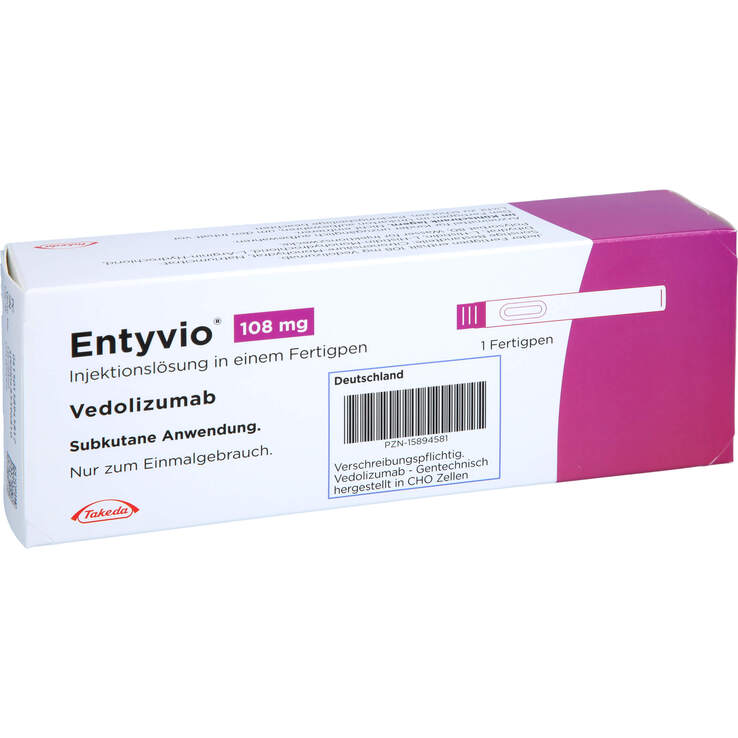
Entyvio (Vedolizumab) is a biologic medication classified as a gut-selective integrin receptor antagonist, primarily used in the treatment of moderate to severe ulcerative colitis (UC) and Crohn’s disease (CD). It represents a major advancement in targeted immunotherapy by offering intestinal selectivity, reducing systemic immunosuppression, and improving long-term disease control for patients who are unresponsive to conventional therapy.
Approved by the U.S. Food and Drug Administration (FDA) in 2014, Entyvio is marketed by Takeda Pharmaceuticals and has since become a cornerstone in the management of inflammatory bowel diseases (IBD).
This article provides an in-depth, clinically focused exploration of Entyvio’s pharmacology, mechanism of action, pharmacokinetics, clinical efficacy, dosage, administration, side effects, precautions, and patient-specific considerations.
Pharmacological Classification
- Generic Name: Vedolizumab
- Brand Name: Entyvio
- Drug Class: Integrin receptor antagonist (gut-selective monoclonal antibody)
- Molecular Type: Humanized IgG1 monoclonal antibody
- Route of Administration: Intravenous (IV) infusion and subcutaneous (SC) injection
- Approved Indications:
- Ulcerative colitis (UC)
- Crohn’s disease (CD)
Mechanism of Action
Entyvio’s pharmacologic mechanism targets the α4β7 integrin, a protein expressed on the surface of certain white blood cells (lymphocytes). This integrin binds to mucosal addressin cell adhesion molecule-1 (MAdCAM-1), which is selectively expressed on blood vessels in the gastrointestinal tract.
1. Integrin-MAdCAM-1 Interaction
- Normally, α4β7 integrin allows T-lymphocytes to migrate from the bloodstream into the intestinal mucosa.
- This migration contributes to chronic inflammation in IBD.
2. Entyvio’s Targeted Blockade
Vedolizumab binds specifically to the α4β7 integrin, inhibiting its interaction with MAdCAM-1, thereby:
- Preventing leukocyte adhesion and migration into inflamed intestinal tissue.
- Reducing mucosal inflammation and promoting intestinal healing.
- Maintaining gut immune surveillance while minimizing systemic immunosuppression (unlike natalizumab, which affects the CNS).
3. Gut-Selective Immunosuppression
Because MAdCAM-1 expression is largely restricted to the GI tract, Entyvio’s action is gut-specific, resulting in:
- Fewer systemic immune effects.
- A lower risk of progressive multifocal leukoencephalopathy (PML), a risk seen with broader integrin inhibitors.
Pharmacokinetics
| Parameter | Description |
|---|---|
| Absorption | Administered IV or SC; bioavailability (SC): ~70% |
| Distribution | Volume of distribution: ~5 L (confined to vascular and extracellular space) |
| Metabolism | Catabolized via nonspecific proteolytic degradation (like endogenous IgG) |
| Elimination Half-Life | Approximately 25 days |
| Clearance | ~0.157 L/day |
| Steady-State | Achieved after ~14–22 weeks of regular dosing |
Vedolizumab is not metabolized by cytochrome P450 enzymes, thus minimizing drug–drug interactions.
Clinical Indications
Entyvio is indicated for the treatment of adults with moderate to severe active ulcerative colitis or Crohn’s disease who have:
- An inadequate response to,
- Lost response to, or
- Were intolerant of conventional therapy or TNF-alpha antagonists (e.g., infliximab, adalimumab).
1. Ulcerative Colitis (UC)
Entyvio induces and maintains clinical remission, improves endoscopic outcomes, and reduces corticosteroid dependence.
2. Crohn’s Disease (CD)
It helps in achieving and maintaining remission in moderate to severe Crohn’s disease, especially in patients refractory to corticosteroids or TNF inhibitors.
Dosage and Administration
1. Intravenous (IV) Infusion
- Induction Phase:
300 mg IV at weeks 0, 2, and 6. - Maintenance Phase:
300 mg every 8 weeks thereafter.
Infusion Duration: Over approximately 30 minutes.
2. Subcutaneous (SC) Injection
- Following at least two IV doses, the patient may transition to 108 mg SC every 2 weeks.
- Injection sites should be rotated (abdomen, thighs, or upper arms).
3. Dose Adjustment
- No dose adjustment is required for renal or hepatic impairment.
- Concomitant use with immunomodulators or corticosteroids is permitted, but patients should be monitored for infection.
Clinical Efficacy
1. GEMINI 1 Trial (Ulcerative Colitis)
- Design: Double-blind, placebo-controlled.
- Results:
- Clinical response at week 6: 47% (vedolizumab) vs. 26% (placebo).
- Clinical remission at week 52: 42% vs. 16%.
2. GEMINI 2 Trial (Crohn’s Disease)
- Design: Randomized, placebo-controlled.
- Results:
- Clinical remission at week 6: 14.5% (vedolizumab) vs. 6.8% (placebo).
- Sustained remission at week 52: 39% vs. 22%.
3. Long-Term Efficacy
- Up to 80% of patients maintained remission at 2 years with continuous therapy.
- Mucosal healing and corticosteroid-sparing effects are significant clinical advantages.
Adverse Effects
While Entyvio is generally well tolerated, several adverse reactions can occur.
Common Side Effects
- Headache
- Nausea
- Arthralgia
- Fever
- Fatigue
- Nasopharyngitis
- Upper respiratory tract infections
Serious Adverse Effects
- Hypersensitivity reactions (rare anaphylaxis)
- Infusion-related reactions (fever, rash, pruritus, dyspnea)
- Serious infections (e.g., pneumonia, sepsis)
- Hepatotoxicity (elevated liver enzymes, rare hepatitis)
- Progressive multifocal leukoencephalopathy (PML) — no cases reported to date
Long-Term Safety
Clinical studies show no increase in malignancy risk with vedolizumab, unlike systemic immunosuppressants.
Contraindications
- Known hypersensitivity to vedolizumab or any formulation component.
- Severe active infections (e.g., sepsis, tuberculosis).
- Concurrent use of other biologic immunomodulators (e.g., TNF inhibitors, natalizumab).
Warnings and Precautions
- Infection Risk
- Avoid in patients with active infections.
- Test for tuberculosis prior to initiation.
- Liver Injury
- Monitor liver function periodically.
- Discontinue if significant liver injury occurs.
- Neurological Disorders
- Monitor for any signs of PML (although gut-selectivity reduces risk).
- Vaccination
- Avoid live vaccines during treatment.
- Administer vaccines before initiating therapy when possible.
Drug Interactions
- Minimal CYP450 interactions due to monoclonal antibody metabolism.
- Concurrent corticosteroids or immunomodulators: safe but may enhance infection risk.
- Live vaccines: contraindicated during treatment.
Use in Specific Populations
1. Pregnancy
- Category: Not assigned (based on human data, low placental transfer).
- Use only if potential benefit justifies potential risk.
- Registry data do not show increased fetal risk.
2. Lactation
- Vedolizumab is detected in breast milk at low levels; clinical significance unknown.
3. Pediatric Use
- Safety and efficacy not established for patients <18 years.
4. Geriatric Use
- No overall differences in safety or efficacy observed.
Patient Counseling Information
Patients should be informed about:
- Early signs of infection (fever, cough, sore throat).
- Importance of adherence to scheduled infusions.
- Avoiding live vaccines during therapy.
- Reporting symptoms of liver injury or neurological changes.
Recent Research and Future Directions
1. Vedolizumab in Non-IBD Conditions
Studies are exploring vedolizumab in:
- Celiac disease
- Autoimmune hepatitis
- Pouchitis
2. Comparative Studies
- Vedolizumab shows superior mucosal healing compared to anti-TNF therapies in long-term studies.
- Lower systemic infection risk and improved quality of life outcomes.
3. Combination Therapy
Research on vedolizumab combined with ustekinumab (IL-12/23 inhibitor) shows promise in refractory IBD.
Clinical Pearls
- Gut-selective mechanism → reduced systemic side effects.
- Slow onset (6–10 weeks) but durable remission.
- Effective alternative in patients who fail TNF inhibitors.
- Excellent long-term safety and tolerability profile.
FAQs About Entyvio (Vedolizumab)
1. What type of drug is Entyvio?
Entyvio is a gut-selective monoclonal antibody that blocks α4β7 integrin, reducing gut inflammation in ulcerative colitis and Crohn’s disease.
2. How long does Entyvio take to work?
Most patients begin to see improvement after 6–10 weeks, though some may take longer.
3. Is Entyvio an immunosuppressant?
It modulates the immune system but is gut-selective, minimizing systemic immunosuppression.
4. Can I use Entyvio with other biologics?
No. It should not be combined with other biologic immunomodulators due to increased infection risk.
5. How is Entyvio administered?
By intravenous infusion (300 mg) or subcutaneous injection (108 mg every 2 weeks).
6. What are the major side effects?
Common effects include headache, joint pain, fatigue, and mild infections. Serious but rare risks include liver injury and allergic reactions.
7. Is Entyvio safe during pregnancy?
Available data suggest it is relatively safe; however, it should only be used if necessary.
8. Does Entyvio increase cancer risk?
Current long-term studies show no increased risk of malignancy.
External Reference Links
- FDA – Entyvio (vedolizumab) Prescribing Information
- Takeda Pharmaceuticals – Entyvio Official Site
- National Center for Biotechnology Information (NCBI) – Vedolizumab Review
- Drugs.com – Entyvio Overview
- PubMed – GEMINI Clinical Trial Results
- Mayo Clinic – Vedolizumab Medication Guide
Conclusion
Entyvio (Vedolizumab) represents a paradigm shift in the management of inflammatory bowel disease, offering targeted, gut-specific immunomodulation with a superior safety profile. Its unique mechanism minimizes systemic adverse effects while achieving effective mucosal healing and sustained remission in both ulcerative colitis and Crohn’s disease.
For healthcare professionals, Entyvio is a valuable therapeutic option—particularly in patients intolerant or unresponsive to TNF inhibitors—demonstrating that precision biologic therapy is the future of IBD management.