
1. Introduction
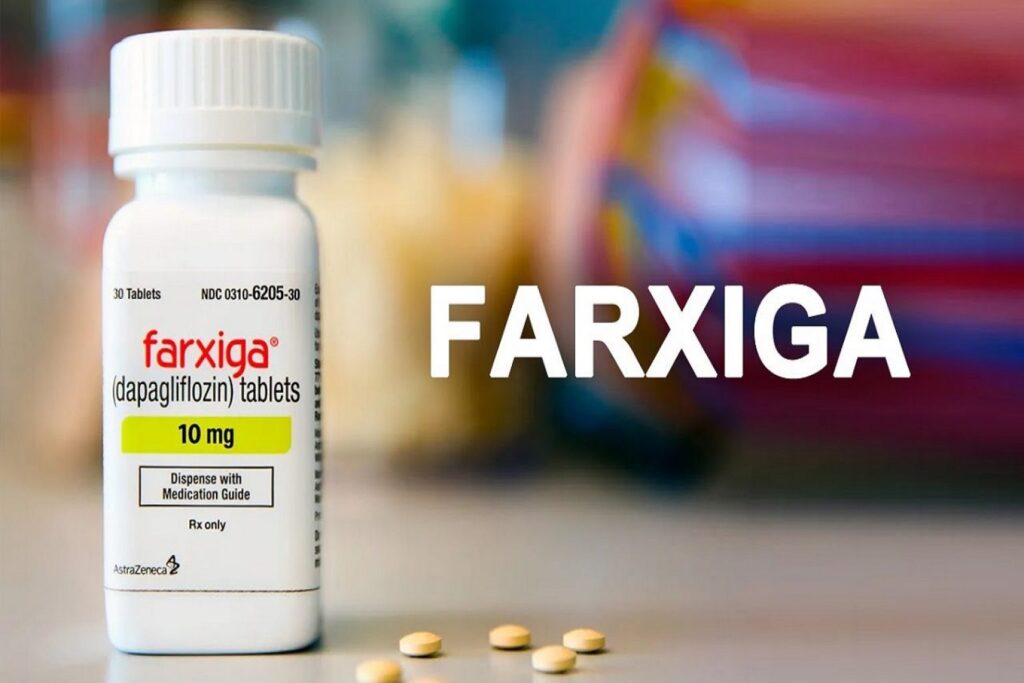
Farxiga (generic name dapagliflozin) is an oral antidiabetic medication belonging to the class of SGLT2 inhibitors (sodium-glucose co-transporter 2 inhibitors).
It is primarily used to improve glycemic control in adults with type 2 diabetes mellitus, and it has additional indications for heart failure and chronic kidney disease (CKD).
By reducing glucose reabsorption in the kidneys, Farxiga lowers blood sugar levels, promotes modest weight loss, and helps reduce cardiovascular and renal risk in diabetic and non-diabetic patients.
2. Classification and Basic Information
| Parameter | Details |
|---|---|
| Generic Name | Dapagliflozin |
| Brand Name | Farxiga® |
| Drug Class | Sodium-Glucose Co-Transporter 2 (SGLT2) Inhibitor |
| Dosage Forms | Oral tablets: 5 mg, 10 mg |
| Prescription Status | Rx only |
| Pregnancy Category | Contraindicated in 2nd and 3rd trimesters |
| Manufacturer | AstraZeneca Pharmaceuticals |
3. Mechanism of Action
Farxiga selectively inhibits the SGLT2 protein located in the proximal renal tubules, which is responsible for reabsorbing about 90% of the glucose filtered by the kidneys.
- Inhibition of SGLT2 → ↓ renal glucose reabsorption
- ↑ Urinary glucose excretion → ↓ plasma glucose levels
- ↓ Blood glucose independent of insulin → effective in insulin resistance
- Mild osmotic diuresis and natriuresis → ↓ blood pressure and body weight
In addition, Farxiga improves cardiovascular and renal outcomes through hemodynamic effects, improved energy utilization, and reduced glomerular hyperfiltration.
4. Pharmacokinetics
| Parameter | Value |
|---|---|
| Absorption | Rapid; peak plasma concentration within 2 hours |
| Bioavailability | ~78% |
| Protein Binding | 91–94% |
| Metabolism | Hepatic (UGT1A9-mediated glucuronidation) |
| Half-life (t½) | 12–13 hours |
| Excretion | Urine (75%), feces (21%) |
| Dosing Frequency | Once daily (with or without food) |
5. Therapeutic Indications
| Indication | Clinical Use |
|---|---|
| Type 2 Diabetes Mellitus | Improves glycemic control when diet and exercise alone are insufficient |
| Heart Failure (HFrEF & HFpEF) | Reduces risk of cardiovascular death or hospitalization |
| Chronic Kidney Disease (CKD) | Slows progression and reduces renal and CV mortality |
| Off-label | Weight reduction, metabolic syndrome (under research) |
6. Dosage and Administration
| Condition | Recommended Dose |
|---|---|
| Type 2 Diabetes | Start with 5 mg once daily; may increase to 10 mg/day |
| Heart Failure / CKD | 10 mg once daily |
| Renal Impairment | Avoid if eGFR < 30 mL/min/1.73 m² |
| Hepatic Impairment | Use with caution |
Patients should maintain adequate hydration to prevent dehydration.
7. Clinical Pharmacology and Key Trials
- DECLARE-TIMI 58 Trial (NEJM, 2019):
Demonstrated that dapagliflozin reduced hospitalization for heart failure in patients with type 2 diabetes. - DAPA-HF Trial (NEJM, 2019):
Showed a 26% reduction in risk of worsening heart failure or cardiovascular death. - DAPA-CKD Trial (NEJM, 2020):
Found that dapagliflozin reduced renal and cardiovascular events in CKD, regardless of diabetes status.
These trials established Farxiga as a multi-benefit drug—effective beyond glucose control.
8. Adverse Effects
Common Side Effects
| Effect | Explanation |
|---|---|
| Genital mycotic infections | Due to glucose in urine promoting fungal growth |
| Urinary tract infections (UTIs) | Increased urinary glucose may foster bacterial growth |
| Polyuria | Osmotic diuresis |
| Hypotension | Volume depletion |
| Nausea / Thirst | Osmotic diuresis-related |
Serious / Rare Effects
- Euglycemic diabetic ketoacidosis (DKA)
- Fournier’s gangrene (necrotizing fasciitis of the perineum)
- Severe dehydration
- Hypoglycemia (when used with insulin or sulfonylureas)
9. Contraindications
- Hypersensitivity to dapagliflozin
- Type 1 diabetes mellitus (risk of ketoacidosis)
- Severe renal impairment (eGFR < 30)
- Active bladder cancer (precaution based on early findings)
10. Precautions and Warnings
- Renal function: Monitor eGFR before and during treatment.
- Volume depletion: Caution in elderly or patients on loop diuretics.
- Ketoacidosis: Educate patients about symptoms (nausea, vomiting, malaise).
- Genital infections: Maintain hygiene; treat promptly if infection occurs.
- Pregnancy and lactation: Avoid use in later trimesters; not recommended during breastfeeding.
11. Drug Interactions
| Drug/Class | Effect |
|---|---|
| Insulin / Sulfonylureas | ↑ Risk of hypoglycemia |
| Loop / Thiazide diuretics | ↑ Dehydration & hypotension |
| Rifampin | ↓ Farxiga exposure (induces metabolism) |
| ACE inhibitors / ARBs | ↑ Hypotension risk (combined BP-lowering effect) |
12. Benefits Beyond Glucose Control
- Cardiovascular Protection: Reduces HF hospitalization and CV death
- Renal Protection: Lowers albuminuria and delays CKD progression
- Weight Reduction: Mild (~2–3 kg) via glycosuria
- Blood Pressure Reduction: 3–5 mmHg average drop
13. Monitoring Parameters
| Parameter | When to Check |
|---|---|
| Blood glucose / HbA1c | Every 3–6 months |
| eGFR / Serum creatinine | Before starting, then periodically |
| Ketone bodies | If symptoms suggest ketoacidosis |
| Blood pressure | Regularly |
| Genital/urinary infections | At each visit |
14. Patient FAQs
Q1. What is Farxiga used for?
Farxiga is used to control blood sugar in type 2 diabetes and to protect the heart and kidneys in patients with or without diabetes.
Q2. How does Farxiga work?
It blocks the SGLT2 transporter in kidneys, causing sugar to be excreted in urine, thus lowering blood sugar and improving cardiovascular and kidney health.
Q3. Can I take Farxiga if I don’t have diabetes?
Yes — it is FDA-approved for heart failure and CKD even in non-diabetic patients.
Q4. What are common side effects?
Genital infections, urinary tract infections, increased urination, and dehydration. These can be managed with good hygiene and hydration.
Q5. Does Farxiga cause weight loss?
Yes, a modest reduction (2–3 kg) occurs due to loss of glucose calories through urine.
Q6. Is Farxiga safe for the kidneys?
Yes — clinical trials show it protects kidney function in both diabetic and non-diabetic patients.
Q7. Can I take Farxiga with insulin?
Yes, but the combination may increase the risk of hypoglycemia; dose adjustments may be needed.
Q8. What should I do if I miss a dose?
Take it as soon as you remember. If it’s almost time for the next dose, skip the missed dose — don’t double up.
15. Summary Table
| Feature | Details |
|---|---|
| Drug Class | SGLT2 Inhibitor |
| Mechanism | Inhibits renal glucose reabsorption |
| Indications | T2DM, Heart Failure, CKD |
| Usual Dose | 5–10 mg once daily |
| Half-life | 12–13 hours |
| Main Side Effects | Genital infections, dehydration |
| Benefits | Lowers glucose, protects heart & kidneys |
| Pregnancy | Avoid in 2nd/3rd trimester |
16. External Reference Links
- FDA – Farxiga (Dapagliflozin) Label
- Drugs.com – Farxiga Monograph
- PubMed – Dapagliflozin in Type 2 Diabetes
- NEJM – DAPA-HF Trial
- NEJM – DAPA-CKD Trial
- Mayo Clinic – Farxiga (Oral Route)
- American Diabetes Association – SGLT2 Inhibitor Guidelines
17. Conclusion
Farxiga (dapagliflozin) represents a major advancement in diabetes and cardiovascular medicine.
By targeting renal glucose transporters, it offers multi-system benefits — lowering blood sugar, protecting the heart, and preserving kidney function.
Its once-daily oral dosing, proven safety, and strong outcome data make it a first-line adjunct therapy for type 2 diabetes and a breakthrough treatment for heart failure and CKD.