
Introduction
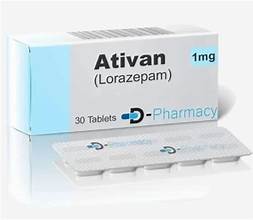
Ativan (generic name: Lorazepam) is a prescription medication from the benzodiazepine class, widely used to treat anxiety disorders, panic attacks, insomnia, and seizures.
Because it’s a central nervous system depressant, understanding how long Ativan stays in your system is crucial — especially for those concerned about drug testing, dosage intervals, side effects, or withdrawal.
Let’s explore in detail how long Ativan stays in the body, how it’s metabolized, and what factors affect its clearance.
What Is Ativan (Lorazepam)?
- Drug class: Benzodiazepine
- Therapeutic use: Anxiety relief, insomnia, sedation, seizure control
- Brand names: Ativan (U.S., U.K.), Temesta (Europe)
- Mechanism of action: Enhances the effect of GABA (gamma-aminobutyric acid) — an inhibitory neurotransmitter — producing calmness, relaxation, and sedation.
Ativan works relatively quickly, making it effective for short-term anxiety management or acute agitation, but it’s also known for its intermediate half-life, meaning it can remain in the body longer than many expect.
How Long Does Ativan Stay in Your System?
The duration depends on dose, frequency, age, metabolism, and overall health.
Below is a breakdown of Ativan’s pharmacokinetics and average detection times in different body systems.
1. Half-Life of Ativan
- Average half-life: 10 to 20 hours
- In elderly or hepatic impairment, half-life can extend to 30+ hours.
- It takes about 5 half-lives for a drug to be almost fully eliminated.
→ So, Ativan can stay in your system for about 2–4 days after a single dose.
Example:
If you take 1 mg of Ativan today, small traces might still be detectable 72–96 hours later.
2. Ativan in Blood
- Detection window: up to 24 hours after the last dose
- Peak concentration occurs within 2 hours after ingestion
- After 24 hours, levels typically drop below most blood test detection thresholds
Clinical significance:
Blood testing is rarely used for benzodiazepine detection unless in emergency or forensic toxicology.
3. Ativan in Urine
- Detection window: up to 6 days (sometimes up to 9 days with repeated dosing)
- Most common test type used for workplace or clinical drug testing.
- Chronic or high-dose users may test positive for up to 10–14 days.
Reason:
Lorazepam is metabolized into inactive glucuronide conjugates, which are excreted in urine but may take longer to clear if kidneys or liver are slower.
4. Ativan in Saliva
- Detection window: Around 8–24 hours after the last dose
- Less commonly used than urine tests.
- Saliva testing is more useful for recent exposure or acute intoxication cases.
5. Ativan in Hair
- Detection window: Up to 90 days (or 3 months)
- Hair tests reflect long-term benzodiazepine exposure, not recent use.
- Even a single dose may be detectable weeks later if hair analysis is done.
Factors Affecting How Long Ativan Stays in the Body
| Factor | Effect on Clearance |
|---|---|
| Dosage & Duration | Higher or repeated doses extend elimination time |
| Age | Elderly clear it slower due to reduced liver metabolism |
| Liver Function | Impaired liver function delays metabolism |
| Body Fat | Ativan is lipid-soluble — more stored in fatty tissues |
| Metabolic Rate | Faster metabolism = quicker elimination |
| Hydration | Adequate water intake may slightly increase clearance |
| Other Medications | Some drugs slow Ativan’s breakdown (CYP inhibitors) |
How the Body Processes Ativan
- Absorption: Rapidly absorbed from the GI tract
- Distribution: Binds strongly to plasma proteins (~85%)
- Metabolism: In the liver via glucuronidation (non-CYP route)
- Excretion: Primarily through urine as inactive metabolites
Because Ativan is not heavily dependent on CYP enzymes, it interacts less with other drugs than many benzodiazepines (like Diazepam or Alprazolam).
Key Takeaways
| Parameter | Typical Duration |
|---|---|
| Onset of action | 15–45 minutes |
| Peak effect | 1–2 hours |
| Half-life | 10–20 hours |
| Duration of effects | 6–12 hours |
| Detectable in urine | 6–9 days |
| Detectable in blood | 24 hours |
| Detectable in hair | 90 days |
Important Considerations
- Even after physical effects wear off, traces of Ativan remain detectable in your body.
- Combining Ativan with alcohol, opioids, or other CNS depressants slows metabolism and increases sedation risk.
- Frequent users or those taking high doses may experience longer detection times and withdrawal symptoms after stopping.
How Long Does It Take to Feel the Effects of Ativan?
- Oral tablets: onset in 15–30 minutes
- Peak effect: around 1.5–2 hours
- Duration: 6–8 hours for most users
- Intravenous/Intramuscular forms: act faster — within minutes
That’s why doctors often prescribe Ativan for acute anxiety attacks, seizures, or preoperative sedation.
How Long Do Ativan’s Effects Last vs How Long It Stays in the Body?
| Phase | Timeframe | What Happens |
|---|---|---|
| Active effect | 6–12 hours | Anxiety relief, sedation |
| Metabolism phase | Up to 24 hours | Breakdown in liver |
| Elimination phase | 2–4 days | Complete clearance via urine |
| Trace detection | Up to 9 days | Detectable in drug tests |
So, while you may feel normal after 8–10 hours, your body still carries residual Ativan for several days.
Drug Testing and Detection Summary
| Test Type | Detection Period | Notes |
|---|---|---|
| Blood test | 6–24 hours | Short detection window |
| Urine test | 2–9 days | Most common |
| Saliva test | 8–24 hours | For recent use |
| Hair test | Up to 90 days | For chronic use history |
Tips for Safer Ativan Use
- Always use under medical supervision.
- Avoid abrupt discontinuation (can trigger withdrawal symptoms).
- Avoid alcohol or sedating medications simultaneously.
- Follow tapering schedules for long-term users.
- Do not exceed the prescribed duration — Ativan is designed for short-term use (typically 2–4 weeks).
When to Talk to Your Doctor
Seek medical advice if you experience:
- Prolonged drowsiness or confusion
- Memory problems
- Withdrawal symptoms (anxiety, tremor, insomnia)
- Mixing Ativan with other medications (especially opioids or antidepressants)
References (External Authoritative Sources)
- U.S. National Library of Medicine – Lorazepam Drug Information
- FDA – Ativan (Lorazepam) Label Information
- Mayo Clinic – How long do benzodiazepines stay in your system?
- Drugs.com – Ativan Half Life and Drug Test Info
- UK NHS – Lorazepam: How it works and how long it stays in the body