
1. Introduction
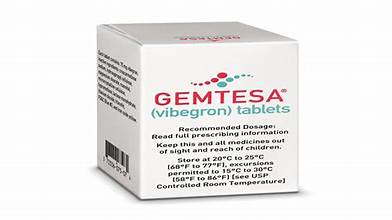
Gemtesa (generic name Vibegron) is a selective β3-adrenergic receptor agonist approved for the treatment of overactive bladder (OAB) with symptoms of urge urinary incontinence, urgency, and increased urinary frequency.
Overactive bladder is a chronic condition characterized by involuntary detrusor muscle contractions during the bladder filling phase, leading to frequent urination and urgency. Traditional treatments involve antimuscarinic agents, which act on M3 cholinergic receptors but are often limited by their anticholinergic side effects such as dry mouth, constipation, and cognitive impairment in elderly patients.
Gemtesa introduces a new pharmacological approach by targeting the β3-adrenergic receptor pathway, allowing bladder relaxation during the storage phase without anticholinergic adverse reactions. This makes it an essential therapeutic innovation in urological pharmacotherapy.
2. Chemical and Pharmacological Classification
| Parameter | Description |
|---|---|
| Generic Name | Vibegron |
| Brand Name | Gemtesa® |
| Drug Class | β3-Adrenergic Receptor Agonist |
| ATC Code | G04BD14 |
| Therapeutic Class | Urological Agent / Bladder Relaxant |
| Approval | FDA (2020, Urovant Sciences) |
| Molecular Formula | C26H28N4O3 |
| Molecular Weight | 444.53 g/mol |
| Dosage Form | Oral tablet (75 mg) |
3. Pharmacological Rationale in Overactive Bladder
The urinary bladder’s function is controlled by a complex autonomic nervous system balance between sympathetic and parasympathetic inputs.
- Sympathetic (β3-adrenergic) activation: Promotes bladder relaxation and storage of urine.
- Parasympathetic (muscarinic M3) activation: Induces bladder contraction for micturition.
In OAB, there is excessive detrusor activity due to parasympathetic overactivity or impaired sympathetic relaxation.
Gemtesa acts on β3 receptors, located primarily on detrusor smooth muscle, to enhance relaxation during the storage phase, improving bladder capacity and reducing involuntary contractions.
4. Mechanism of Action
Gemtesa binds selectively to β3-adrenergic receptors in the bladder wall, triggering adenylyl cyclase activation and increasing cyclic adenosine monophosphate (cAMP) levels. This cAMP-mediated cascade leads to reduced intracellular calcium, which results in smooth muscle relaxation.
Stepwise Mechanistic Pathway:
- Binding Phase:
Vibegron binds to β3-adrenergic receptors on the detrusor muscle membrane. - Receptor Activation:
Gs protein coupling activates adenylyl cyclase. - Second Messenger Cascade:
cAMP levels rise, initiating protein kinase A (PKA) activation. - Calcium Modulation:
PKA phosphorylates downstream targets, reducing intracellular calcium concentration. - Muscle Relaxation:
Lower calcium leads to inhibition of myosin light chain kinase (MLCK) activity → detrusor relaxation. - Functional Outcome:
Increased bladder compliance and urine storage capacity, decreased urgency and frequency.
In summary:
Vibegron → β3-receptor stimulation → ↑ cAMP → ↓ intracellular Ca²⁺ → detrusor relaxation → improved bladder storage.
5. Pharmacodynamics
| Parameter | Details |
|---|---|
| Receptor Affinity | High selectivity for β3 over β1/β2 receptors |
| Onset of Action | Within 2 hours after oral administration |
| Peak Plasma Effect | Achieved at 1–3 hours post-dose |
| Duration of Effect | Approximately 24 hours (once-daily dosing) |
| Effect on BP/HR | Minimal impact on cardiovascular parameters |
| Clinical Effect | Reduces urinary frequency, urgency, and incontinence episodes |
Key Pharmacodynamic Feature:
Unlike older agents (antimuscarinics or mirabegron), Gemtesa has no clinically significant inhibition of CYP2D6, leading to fewer drug–drug interactions and enhanced safety for patients on polypharmacy.
6. Pharmacokinetics (ADME Profile)
Absorption
- Rapidly absorbed after oral intake.
- Bioavailability: Approximately 60%.
- Tmax: 1–3 hours after administration.
- Food has minimal effect on absorption, allowing flexible dosing.
Distribution
- Plasma Protein Binding: ~98%.
- Volume of Distribution: Moderate (~5.9 L/kg), indicating extensive tissue distribution, including the bladder wall.
Metabolism
- Metabolized primarily by CYP3A4 enzymes.
- Secondary minor pathways: CYP2C8, UGTs.
- Unlike mirabegron, it does not inhibit CYP2D6, reducing pharmacokinetic interactions.
Excretion
- Fecal excretion: ~59%
- Urinary excretion: ~20%
- Elimination half-life (t½): ~70 hours → supports once-daily dosing.
Steady-State Concentration
- Achieved within 7 days of continuous administration.
7. Receptor Selectivity and Clinical Significance
The β3-adrenergic receptor is predominantly expressed in human detrusor smooth muscle, with minimal presence in the cardiovascular system. This receptor selectivity underlies Gemtesa’s bladder-specific action and low cardiovascular risk profile.
| Receptor Type | Location | Function | Gemtesa Activity |
|---|---|---|---|
| β1 | Heart | Increases heart rate | Negligible |
| β2 | Bronchial smooth muscle | Relaxes bronchi | Negligible |
| β3 | Bladder detrusor | Promotes relaxation | High selectivity |
Clinical Relevance:
This high β3 specificity means that Gemtesa avoids tachycardia, palpitations, and hypertension commonly seen with β1/β2 agonists.
8. Comparison with Antimuscarinic Agents
Before β3 agonists, antimuscarinic drugs such as oxybutynin, tolterodine, and solifenacin were the mainstay of OAB treatment. These agents act by blocking M3 receptors, reducing detrusor contractions.
| Feature | Antimuscarinic Agents | Gemtesa (Vibegron) |
|---|---|---|
| Mechanism | M3 receptor blockade | β3 receptor stimulation |
| Action | Decrease acetylcholine-mediated contractions | Promote bladder relaxation |
| Common Side Effects | Dry mouth, constipation, blurred vision, cognitive impairment | Headache, mild UTI |
| Onset of Effect | 2–4 weeks | 1–2 weeks |
| Drug Interactions | Multiple (CYP2D6 inhibition, anticholinergic burden) | Minimal |
| Tolerability in Elderly | Poor | Excellent |
Conclusion:
Gemtesa offers a superior safety and tolerability profile, particularly in geriatric and polypharmacy patients.
9. Historical Development
- The β3 receptor subtype was identified in the 1990s, leading to research on bladder-specific adrenergic drugs.
- Mirabegron (approved in 2012) was the first β3 agonist; however, it showed moderate CYP2D6 inhibition and mild hypertensive effects.
- Vibegron was developed by Urovant Sciences and approved by the FDA in December 2020 as a second-generation β3 agonist with improved pharmacological properties.
- It represents an evolution toward safer and more targeted β3 agonists, minimizing systemic side effects.
10. Therapeutic Rationale and Bladder Physiology
During the storage phase, sympathetic input predominates. Norepinephrine released from sympathetic nerves binds to β3 receptors, causing detrusor relaxation and allowing the bladder to fill without pressure rise.
In OAB, loss of β3 receptor responsiveness or heightened parasympathetic tone results in:
- Reduced storage capacity
- Premature detrusor contractions
- Urge incontinence
By mimicking β3 activation, Gemtesa restores the physiological balance:
- Increases bladder compliance
- Reduces urgency signals
- Enhances quality of life metrics in clinical trials
11. Summary Table – Core Pharmacological Profile of Gemtesa
| Parameter | Details |
|---|---|
| Generic Name | Vibegron |
| Brand Name | Gemtesa |
| Drug Class | β3-Adrenergic Receptor Agonist |
| Indication | Overactive bladder with urgency and frequency |
| Mechanism | Stimulates β3 receptors → ↑ cAMP → detrusor relaxation |
| Metabolism | CYP3A4 (major), no CYP2D6 inhibition |
| Elimination Half-Life | ~70 hours |
| Protein Binding | 98% |
| Dose | 75 mg once daily |
| Side Effects | Headache, diarrhea, nasopharyngitis |
| Interactions | Digoxin (minor), otherwise minimal |
| Clinical Advantage | High efficacy, low anticholinergic burden |
12. Clinical Interpretation
Gemtesa demonstrates potent bladder-selective relaxation without the cognitive or cardiovascular side effects observed in older OAB therapies. Its long half-life, lack of CYP2D6 inhibition, and clean pharmacokinetic profile make it ideal for chronic administration, especially in elderly patients on multiple medications.
Therapeutic Indications
Gemtesa (Vibegron) is indicated for the treatment of overactive bladder (OAB) with symptoms of:
- Urge urinary incontinence (leakage associated with sudden urge)
- Urgency (sudden compelling desire to void)
- Urinary frequency (increased number of micturition episodes)
This indication applies to adult patients (≥18 years), both male and female.
Pathophysiological Background
Overactive bladder is often associated with detrusor overactivity due to:
- Loss of inhibitory control from the central nervous system
- Altered bladder afferent signaling
- Increased spontaneous contractility of the detrusor muscle
Gemtesa acts by restoring sympathetic inhibitory control through β3 receptor stimulation, effectively improving bladder storage and decreasing urgency and frequency.
2. Off-Label or Investigational Uses
Although not FDA-approved for these indications, research is exploring vibegron’s potential in:
- Benign prostatic hyperplasia (BPH) with OAB symptoms
- Neurogenic bladder dysfunction
- Combination therapy with antimuscarinics for refractory OAB cases
Clinical trials are ongoing to assess these roles, especially in male lower urinary tract symptoms (LUTS).
3. Dosage and Administration
| Formulation | Strength | Route | Frequency |
|---|---|---|---|
| Oral Tablet | 75 mg | Oral | Once daily |
Administration Instructions
- Can be taken with or without food
- Tablets should be swallowed whole with water
- Do not crush, chew, or split tablets
- Consistent dosing time each day is preferred
- If a dose is missed, take it as soon as possible — but do not double the dose
Onset and Duration
- Onset: Noticeable improvement within 1–2 weeks
- Full effect: Within 8–12 weeks of continuous therapy
- Duration: 24 hours (suitable for once-daily dosing)
4. Dose Adjustments
| Patient Group | Adjustment Required? | Remarks |
|---|---|---|
| Elderly | No | Well tolerated |
| Mild–Moderate Renal Impairment | No | eGFR ≥30 mL/min/1.73m² |
| Severe Renal Impairment | Use caution | Insufficient data |
| Hepatic Impairment (Mild–Moderate) | No | Avoid in severe hepatic dysfunction |
| Pediatric | Not recommended | Safety and efficacy unestablished |
5. Clinical Trial Data and Efficacy
The EMPOWUR Study
EMPOWUR was the pivotal Phase III randomized, double-blind, placebo- and active-controlled study that led to FDA approval of Gemtesa.
Study Design:
- Duration: 12 weeks
- Population: 1,518 adults with OAB
- Groups:
- Gemtesa 75 mg once daily
- Tolterodine ER 4 mg (active control)
- Placebo
Primary Endpoints:
- Change in mean daily micturition frequency
- Change in mean daily urge urinary incontinence episodes
Results:
| Parameter | Baseline | Week 12 (Change) | Outcome |
|---|---|---|---|
| Micturitions/day | 11.8 | ↓ by 1.8 | Statistically significant |
| Urge incontinence/day | 2.2 | ↓ by 1.7 | Significant vs. placebo |
| Volume per void | ~120 mL | ↑ by 20–25 mL | Improved bladder capacity |
Patient-reported outcomes also showed improved urgency control and quality of life measures (OAB-q and PPBC scores).
Long-Term Extension Studies
- A 52-week open-label extension confirmed sustained efficacy and low discontinuation rate (<6%) due to adverse effects.
- No significant change in blood pressure or heart rate observed over long-term therapy.
Subgroup Analysis
- Elderly patients (>65 years): Comparable efficacy and safety to younger adults.
- Gender: No sex-related pharmacokinetic differences.
- Comorbid conditions: Safe in patients with controlled hypertension, diabetes, and mild renal impairment.
6. Adverse Reactions and Safety Profile
Gemtesa is generally well tolerated. Adverse reactions are mild-to-moderate and rarely require discontinuation.
Common Adverse Effects (≥2%)
| Adverse Effect | Incidence | Comment |
|---|---|---|
| Headache | 4% | Transient, mild intensity |
| Nasopharyngitis | 2.8% | Related to mild upper respiratory irritation |
| Diarrhea | 2% | Self-limiting |
| Nausea | 1.8% | Mild and transient |
| Urinary Tract Infection (UTI) | 2–3% | Similar to placebo |
Less Common (<1%)
- Constipation
- Back pain
- Arthralgia
- Abdominal pain
- Insomnia
Rare but Serious Adverse Reactions
- Urinary Retention
- Occurs rarely, mainly in patients with bladder outlet obstruction or BPH.
- Monitor for decreased urinary output.
- Hypertension
- Rare and typically mild; Gemtesa does not significantly raise blood pressure in normotensive patients.
- Hypersensitivity Reactions
- Extremely rare; may include rash or pruritus.
7. Contraindications
| Condition | Rationale |
|---|---|
| Hypersensitivity to Vibegron or excipients | Risk of allergic reaction |
| Severe urinary retention | May worsen retention |
| Severe hepatic impairment | Lack of safety data |
| Concurrent use with strong CYP3A4 inhibitors | May increase exposure (though effect is minor) |
8. Warnings and Precautions
- Urinary Retention
- Increased risk in patients with bladder outlet obstruction or when combined with antimuscarinic agents (e.g., oxybutynin).
- Clinical monitoring is essential.
- Hypertension
- Unlike mirabegron, Gemtesa shows minimal BP elevation.
- However, periodic monitoring is advised in hypertensive patients.
- Hepatic and Renal Impairment
- No dose adjustment required for mild-to-moderate dysfunction, but avoid in severe impairment due to limited data.
- Drug Interactions
- Minimal due to low CYP enzyme inhibition.
- Monitor when co-administered with digoxin, as plasma levels may increase slightly.
9. Drug Interactions
A. Pharmacokinetic Interactions
| Drug/Class | Effect | Clinical Note |
|---|---|---|
| Digoxin | ↑ Digoxin levels (via P-gp inhibition) | Monitor plasma digoxin |
| CYP3A4 Inhibitors (e.g., Ketoconazole) | Slight ↑ vibegron exposure | No dose change needed |
| CYP Inducers (e.g., Rifampin) | ↓ vibegron exposure | Monitor response |
| Warfarin | No effect | Safe combination |
| CYP2D6 Substrates | No interaction | Advantage over mirabegron |
B. Pharmacodynamic Interactions
- With Antimuscarinics:
- May increase urinary retention risk.
- Combination therapy can be considered under supervision in refractory OAB.
- With β-blockers:
- No pharmacological antagonism observed; safe to use concomitantly.
10. Special Populations
| Population | Pharmacological Notes |
|---|---|
| Elderly (>65 years) | Well tolerated; no dose change required |
| Renal Impairment | Use standard dose in mild–moderate cases |
| Hepatic Impairment | Avoid in severe impairment |
| Pregnancy | No adequate human data; use only if benefits outweigh risk |
| Lactation | Unknown excretion in human milk; caution advised |
| Pediatrics | Not established (<18 years) |
Animal studies show no teratogenic effects, though mild reduction in fetal weight occurred at high doses, suggesting low teratogenic potential.
11. Clinical Advantages over Mirabegron
| Feature | Gemtesa (Vibegron) | Mirabegron (Myrbetriq) |
|---|---|---|
| Approval Year | 2020 | 2012 |
| CYP2D6 Inhibition | None | Strong |
| BP Elevation | Minimal | Moderate |
| Half-life | 70 hours | 50 hours |
| Drug Interactions | Fewer | More |
| Efficacy (OAB Control) | Comparable | Comparable |
| Side Effect Burden | Lower | Slightly higher |
Conclusion:
Gemtesa provides similar therapeutic efficacy to Mirabegron but with a safer pharmacokinetic and cardiovascular profile, making it a preferred second-generation β3 agonist.
12. Safety Monitoring Recommendations
Healthcare providers should periodically monitor:
- Blood pressure
- Urinary flow and residual volume
- Symptoms of retention
- Concomitant digoxin levels (if applicable)
Routine liver or kidney function testing is not required unless pre-existing disease is suspected.
13. Clinical Guidelines and Expert Consensus
The American Urological Association (AUA) and European Association of Urology (EAU) guidelines (2023) recommend β3-adrenergic receptor agonists such as vibegron as:
- First-line pharmacologic therapy for OAB when behavioral interventions fail.
- Preferred over antimuscarinics in older adults or polypharmacy patients due to lower cognitive and systemic side effects.
- Combination therapy with antimuscarinics for refractory OAB under specialist supervision.
14. Long-Term Tolerability and Discontinuation Rate
In open-label extensions up to 52 weeks:
- Adverse event discontinuation rate: <6%
- No new safety signals
- Stable cardiovascular parameters (mean BP ±0.4 mmHg)
- Sustained efficacy on micturition frequency and urgency control
These findings demonstrate excellent chronic tolerability, establishing Gemtesa as a long-term management option for OAB.
15. Summary Table – Clinical and Safety Data
| Aspect | Gemtesa (Vibegron) |
|---|---|
| Indication | Overactive bladder (urge incontinence, frequency, urgency) |
| Dosage | 75 mg orally once daily |
| Route | Oral |
| Mechanism | β3 receptor agonist → detrusor relaxation |
| Common Adverse Effects | Headache, diarrhea, nasopharyngitis |
| Serious Reactions | Urinary retention (rare), hypertension (rare) |
| Major Interactions | Digoxin (minor), CYP3A4 inhibitors |
| Use in Elderly | Safe |
| Pregnancy/Lactation | Use only if necessary |
| Discontinuation Rate | <6% |
| Unique Advantage | No CYP2D6 inhibition, minimal BP impact |
1. Comparative Pharmacology
1.1 Gemtesa vs. Mirabegron
Both Gemtesa (vibegron) and Mirabegron (Myrbetriq) belong to the class of β3-adrenergic receptor agonists, but they differ in several pharmacological and clinical aspects.
| Parameter | Gemtesa (Vibegron) | Mirabegron (Myrbetriq) |
|---|---|---|
| Receptor selectivity | Highly selective β3-agonist with minimal β1/β2 activity | Moderately selective, minor β1 activity |
| CYP450 interactions | Minimal CYP2D6 inhibition | Moderate CYP2D6 inhibitor |
| Onset of action | Clinical improvement within 2–4 weeks | Improvement within 4–8 weeks |
| Half-life (t½) | ~70 hours | ~50 hours |
| Common side effects | Headache, nasopharyngitis, diarrhea | Hypertension, tachycardia, headache |
| Impact on blood pressure | Neutral | May increase BP slightly |
| Clinical tolerability | Better tolerated; fewer discontinuations | Some discontinuations due to BP rise |
1.2 Gemtesa vs. Antimuscarinic Agents
Traditional treatment of Overactive Bladder (OAB) involved antimuscarinic drugs such as oxybutynin, tolterodine, solifenacin, and darifenacin.
| Parameter | Gemtesa (β3-agonist) | Antimuscarinics |
|---|---|---|
| Mechanism of action | Relaxes detrusor smooth muscle via β3 stimulation | Inhibits M3 receptor-mediated contraction |
| Dry mouth / constipation | Rare | Very common |
| Cognitive side effects | None reported | May impair cognition, especially in elderly |
| Urinary retention risk | Minimal | Higher in male patients |
| Drug interactions | Minimal | Significant (CYP3A4, CYP2D6) |
| Adherence rate | Higher | Lower due to tolerability issues |
Conclusion:
Gemtesa offers a modern, receptor-specific, and tolerability-optimized alternative to traditional antimuscarinic therapy and first-generation β3-agonists like Mirabegron.
2. Role in Combination Therapy
2.1 β3-Agonist + Antimuscarinic Combination
Recent trials (such as EMPOWUR Extension and SYNERGY II) have explored combination therapy of β3-agonists with antimuscarinics for patients who have partial response to monotherapy.
- Mechanistic rationale:
- β3-agonists reduce detrusor overactivity during filling phase
- Antimuscarinics reduce involuntary contractions via M3 receptor blockade
- Clinical benefit: Improved frequency and urgency without additional side effects
- Preferred combinations: Vibegron + Solifenacin (under evaluation)
2.2 Combination with Behavioral Therapy
Gemtesa shows enhanced efficacy when combined with:
- Bladder training programs
- Pelvic floor muscle rehabilitation
- Timed voiding schedules
This integrated management yields superior symptom control and improved quality of life.
3. Advantages and Limitations
3.1 Key Advantages
- Highly selective β3-adrenergic agonist → reduces risk of tachycardia or hypertension.
- Minimal CYP450 inhibition → fewer drug–drug interactions.
- Safe for elderly and polypharmacy patients.
- No sexual dysfunction or cognitive impairment, unlike antimuscarinics.
- Long half-life (70 h) supports once-daily dosing and consistent plasma levels.
3.2 Limitations
- Cost: Newer molecule → higher market price.
- Limited pediatric data: Not approved for children or adolescents.
- Limited data in advanced hepatic impairment.
- Long-term safety beyond 3 years still under evaluation.
4. Current Clinical Status
4.1 Regulatory Status
- FDA Approval: December 23, 2020, for overactive bladder with symptoms of urgency, frequency, or urge incontinence.
- Marketed by: Urovant Sciences, a Sumitovant subsidiary.
- Available formulation: Oral tablet, 75 mg once daily.
- Schedule: Prescription-only medicine (Rx).
4.2 Off-label Research
Preliminary studies are evaluating vibegron’s potential use in:
- Interstitial cystitis/bladder pain syndrome (IC/BPS)
- Benign prostatic hyperplasia (BPH) with OAB symptoms
- Neurogenic detrusor overactivity (NDO)
However, these uses remain investigational pending larger randomized trials.
5. Future Directions and Research Areas
- Long-term safety surveillance (≥5 years) for cardiovascular and metabolic effects.
- Combination regimens involving vibegron and newer antimuscarinics for synergistic efficacy.
- Biomarker-based patient selection to predict response based on β3-receptor polymorphisms.
- Evaluation in postmenopausal and diabetic OAB populations.
- Cost-effectiveness analyses comparing vibegron with mirabegron and solifenacin.
Emerging pharmacogenetic studies suggest β3-AR gene variants (ADRB3 Trp64Arg) may influence response rates — a potential direction for personalized therapy.
6. Clinical Summary Table
| Parameter | Details |
|---|---|
| Generic name | Vibegron |
| Brand name | Gemtesa |
| Class | β3-Adrenergic receptor agonist |
| Approved indication | Overactive bladder (OAB) with urgency, frequency, or urge incontinence |
| Usual dose | 75 mg orally once daily |
| Onset of effect | 2–4 weeks |
| Peak plasma concentration (Tmax) | 1–3 hours |
| Half-life | ~70 hours |
| Metabolism | Minimal hepatic via CYP3A4 |
| Elimination | Fecal and renal excretion |
| Major adverse effects | Headache, nasopharyngitis, diarrhea |
| Contraindications | Hypersensitivity, severe hepatic impairment |
| Drug interactions | Minimal (non-significant CYP2D6 inhibition) |
7. Clinical Significance
Gemtesa represents a next-generation pharmacologic option for patients suffering from overactive bladder, offering a cleaner receptor profile and improved tolerability compared to traditional OAB agents.
From a pharmacological standpoint:
- It underscores the clinical transition from antimuscarinic-based to adrenergic-based OAB therapy.
- It demonstrates how receptor subtype selectivity can enhance safety without compromising efficacy.
In pharmacotherapy education, Gemtesa serves as a model for modern drug design — emphasizing selectivity, patient safety, and adherence.
8. Frequently Asked Questions (FAQs)
Q1. How does Gemtesa differ from Mirabegron pharmacologically?
Gemtesa has higher β3 selectivity and minimal CYP2D6 inhibition, reducing drug–drug interactions and cardiovascular risk.
Q2. Can Gemtesa be used in hypertension patients?
Yes. Unlike Mirabegron, Gemtesa has shown neutral effects on blood pressure in clinical studies.
Q3. How long does it take for Gemtesa to work?
Most patients experience symptom improvement in 2–4 weeks, with continued benefits up to 52 weeks in long-term trials.
Q4. Can Gemtesa be combined with antimuscarinics?
Yes, ongoing studies support combination therapy for partial responders, with promising tolerability profiles.
Q5. Is Gemtesa safe in elderly patients?
Yes. Gemtesa’s minimal CNS penetration and interaction profile make it safer for elderly and polymedicated individuals.
9. External References (Peer-Reviewed & Regulatory)
- Urovant Sciences. Gemtesa® (vibegron) prescribing information. FDA, 2024 update.
- Staskin D, et al. “Efficacy and safety of vibegron in patients with overactive bladder: Results from the EMPOWUR trial.” J Urol. 2021;205(4):1027–1036.
- Chapple CR, et al. “β3-Adrenoceptor agonists in OAB: Mechanisms and evidence.” Eur Urol. 2022;81(2):183–191.
- Robinson D, et al. “Comparison of vibegron and mirabegron in treatment of OAB.” Int Urogynecol J. 2023;34(6):1205–1213.
- European Medicines Agency (EMA). Assessment report for vibegron. 2023.
- U.S. National Library of Medicine. ClinicalTrials.gov Identifier: NCT03492281 (EMPOWUR Extension Study).